Free printable
Birthday Card Printable: 20 Free Cards Kids Color Themselves
Free printable birthday cards for kids to color: cards for friends, family and classmates, four blank cards to design and a fold-up envelope that fits them.
The sheets on this page are ours and free to print. The product cards further down link to Creative Fabrica; those are affiliate links, so a signup or purchase through them can earn this site a commission.
This birthday card printable is made for children to color and give themselves. It has 6 pages: four pages of ready-made cards, four to a page, for anyone, friends, family and classmates; a fifth page of four blank card frames; and a fold-up envelope template sized for the cards. Each card is a rounded frame about 3 1/8 x 3 3/4 inches (8 x 9.5 cm) with To and From lines, and dashed lines divide the page into quarters, one card in each. Line art only, on letter-size paper, so a class set is quick to run off on a home printer.
Pull the single sheet a child needs, or the full six-page PDF for a classroom.
Free printoutBirthday Card Printable6 pages, black and white, US Letter
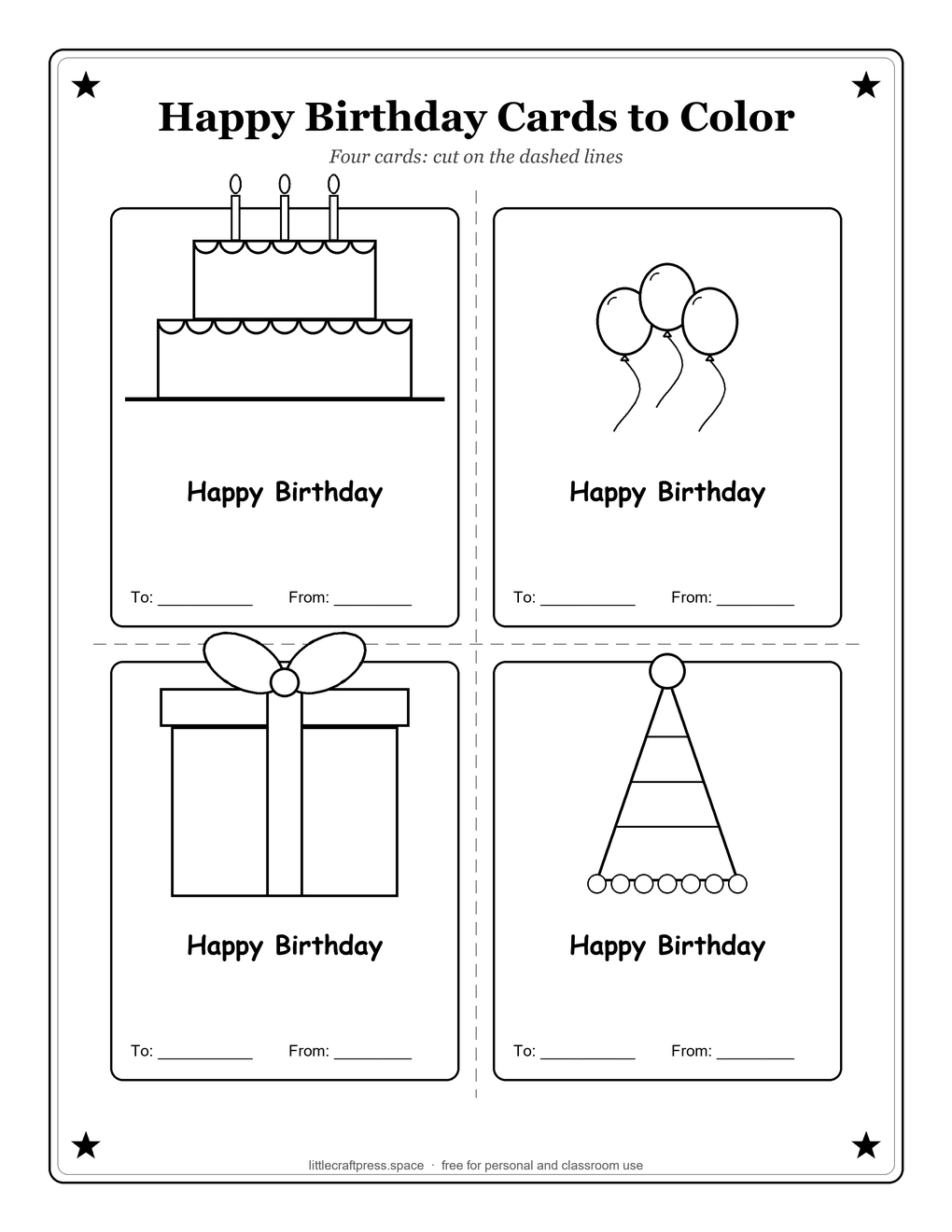
1Happy Birthday Cards
Four to color

2Cards for Friends
Four messages

3Cards for Family
Mom, Dad, Grandma, Grandpa
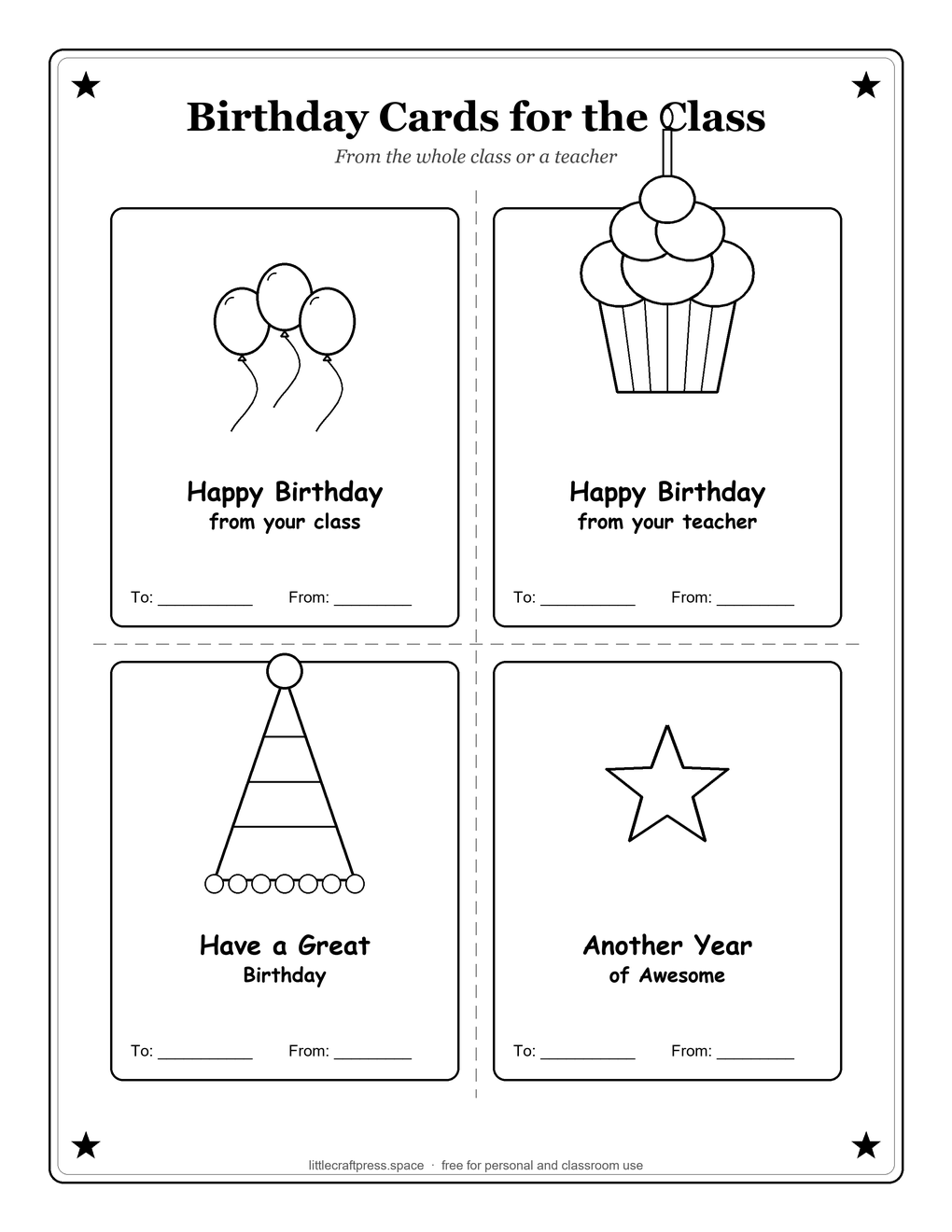
4Cards from the Class
Class and teacher
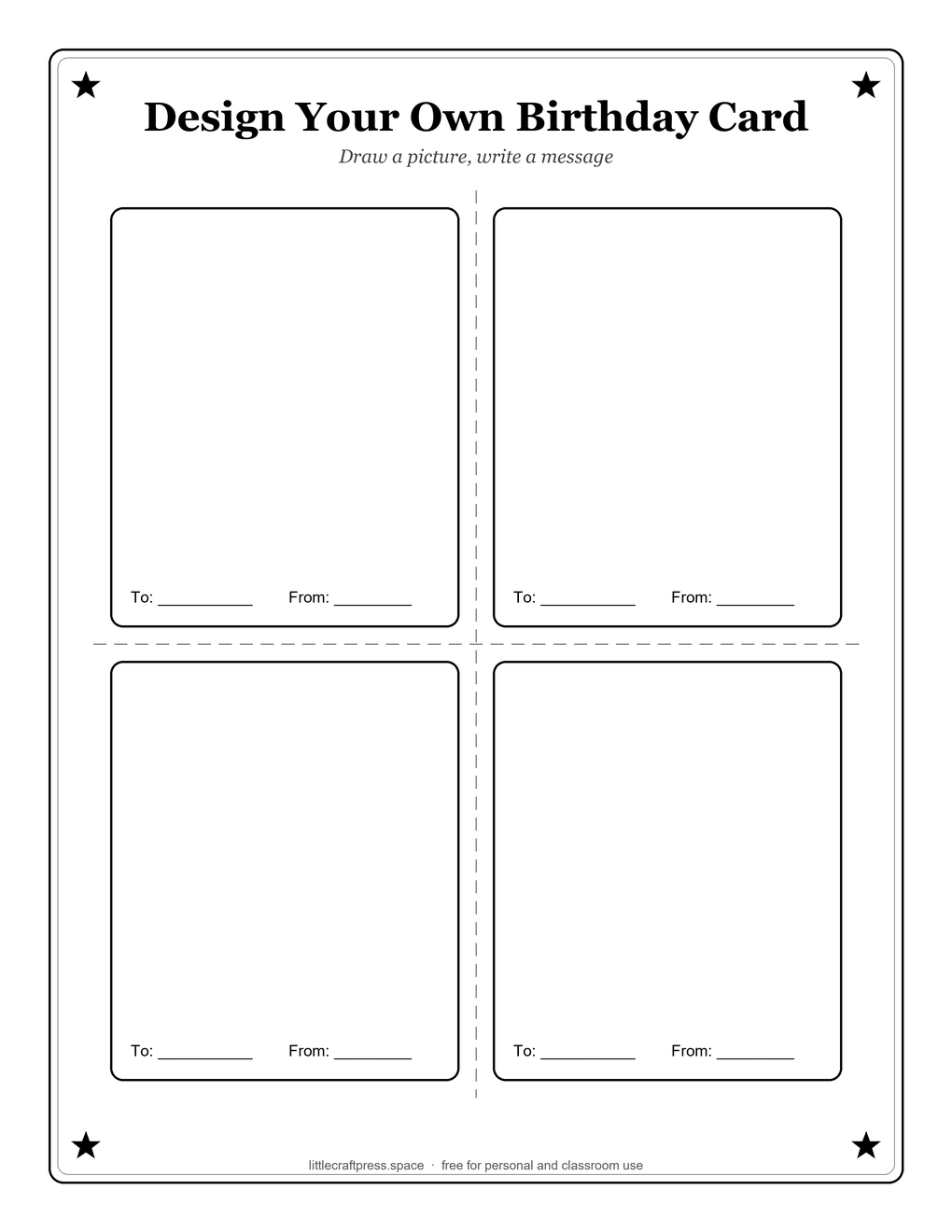
5Design Your Own
Blank cards
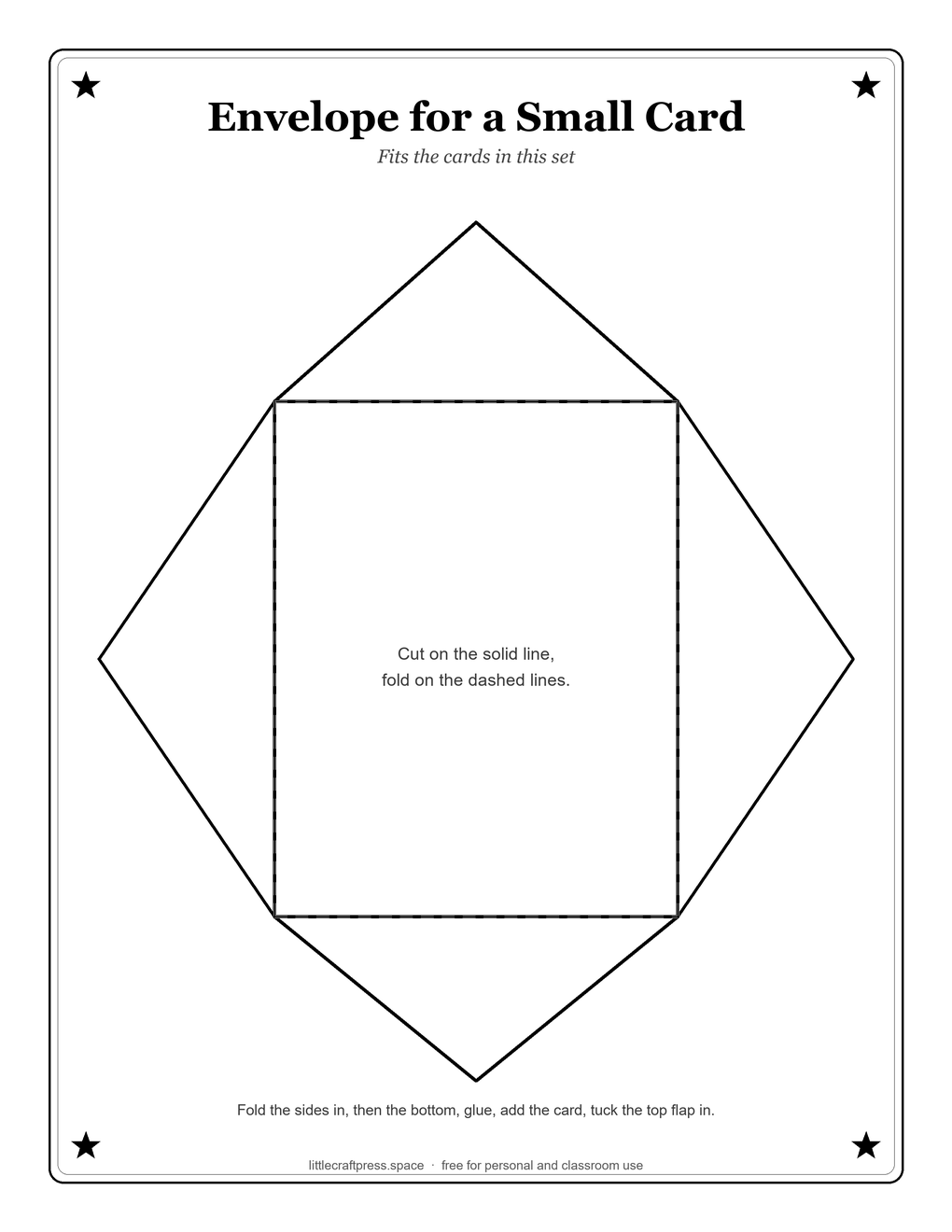
6Envelope
Fold-up template
Whole set in one PDFWhole set: 6 pages in one PDF.
Twenty Cards and an Envelope
| Page | The four cards | Who it is for |
|---|---|---|
| Happy Birthday Cards | Cake, balloons, gift, party hat | Anyone |
| Cards for Friends | "You're a Star", "Have a Sweet Birthday" (cupcake), "Let's Celebrate" (balloons), "Best Friends" (heart) | Friends |
| Cards for Family | Happy Birthday Mom, Dad, Grandma, Grandpa | Family |
| Cards from the Class | "from your class", "from your teacher", "Have a Great Birthday", "Another Year of Awesome" | School |
| Design Your Own | Four blank card frames | Young artists |
| Envelope | A fold-up envelope for one card | Giving or mailing |
That makes 20 cards in all. The cards are flat, not folded, so the picture and the message are on the front, and the back is free for a drawing or a longer note.
When a Card a Child Made Is the Right Card
A store card says what an adult would say. A card a child colored says that the child thought about the person, and the people who get them tend to keep them.
They fit best when:
- A classmate has a birthday. A small card is easy to hand over at school and does not compete with presents.
- Grandparents live far away. A colored card with a name signed in big letters is the kind of thing that ends up on the fridge.
- Mom or Dad has a birthday. The family page lets a child make a card without anyone having to buy one in secret.
- The child goes to a party. A colored card taped to the gift is a nice touch.
How to Make the Cards
- Print the page you need. Cardstock makes the cards sturdier; plain paper is fine for cards that go into an envelope.
- Color all four cards while they are still on one sheet. It is easier to hold, and nothing gets lost.
- Cut along the dashed lines. One cut across and one cut down split the page into four quarters; then trim each quarter along the card's outline, or leave a narrow white border around it.
- Fill in the To and From lines.
- Add something on the back, if there is time: a drawing, a sticker, a photo.
According to McMaster University's CanChild centre, straight-line cutting gets reasonably accurate around ages three to four, and following a shape fairly well comes at four to five, so by five most can handle the two straight cuts with blunt-tip scissors. Rounded corners are harder; younger children can color while an adult does the cutting.

Examples we colored digitally on the card pages to show the idea. Nothing here was made by a child, and these are not photos.
Writing Tips by Age
Children write at very different stages, and a card should not turn into a handwriting test.
- Ages 2 to 3. The child colors, and an adult writes what the child says, word for word. "I love you because you have a dog" is better than anything an adult would think up.
- Ages 4 to 5. Write the name on a scrap of paper in light pencil, and let the child copy or trace it on the From line. The CDC's milestone checklist expects a five-year-old to write some of the letters in their name, so tracing the rest is normal.
- Ages 6 to 7. Spell out a short message on a separate sheet, and the child writes it on the back. Spelling mistakes are part of the charm.
- Ages 8 and up. They can write the whole thing. Suggest one specific memory or wish instead of "Have a good day."
The Design Your Own page suits children who already have an idea. The blank frames leave room for a drawing of the person, a favorite animal or a big age number.
Adding a Photo or a Drawing
The back of each card is blank, and it is the best place to make the card personal.
- A small photo. Print a wallet-size photo of the child with the birthday person and glue it to the back.
- A drawing. A self-portrait, the two of them together, or the present the child wishes they could give.
- Stickers. A few stickers around the To line on the front make a quick card look finished.
The Envelope
The last page is a fold-up envelope sized for these cards. Folded, its pocket is about 3 5/8 x 4 5/8 inches (9.1 x 11.7 cm). Cut it out on the solid line, then fold on the dashed lines: fold the sides in first, then fold the bottom up and glue it to the sides. Slide the card in and tuck the top flap. Write the name on the front with a marker.
This envelope is for handing a card over in person, at school, at the party or at the dinner table.
If you want to mail a card, put it in a standard envelope instead. USPS rules say a letter must be at least 3 1/2 inches high and 5 inches long, and at least 0.007 inch thick; anything smaller is nonmailable. The folded envelope from this page is under 5 inches long, so it cannot go in the mail on its own. An A2 envelope, 4 3/8 x 5 3/4 inches (111 x 146 mm), is a common size for small cards, clears the minimum, and holds one of these cards with room to spare. Keep the contents flat: a letter can be at most 1/4 inch thick, and a lumpy or rigid one counts as nonmachinable and costs extra postage.
Card-Making Box
Crayons and washable markers both work on these cards. Fine tips are best for the To and From lines and for the small cards from the class page.
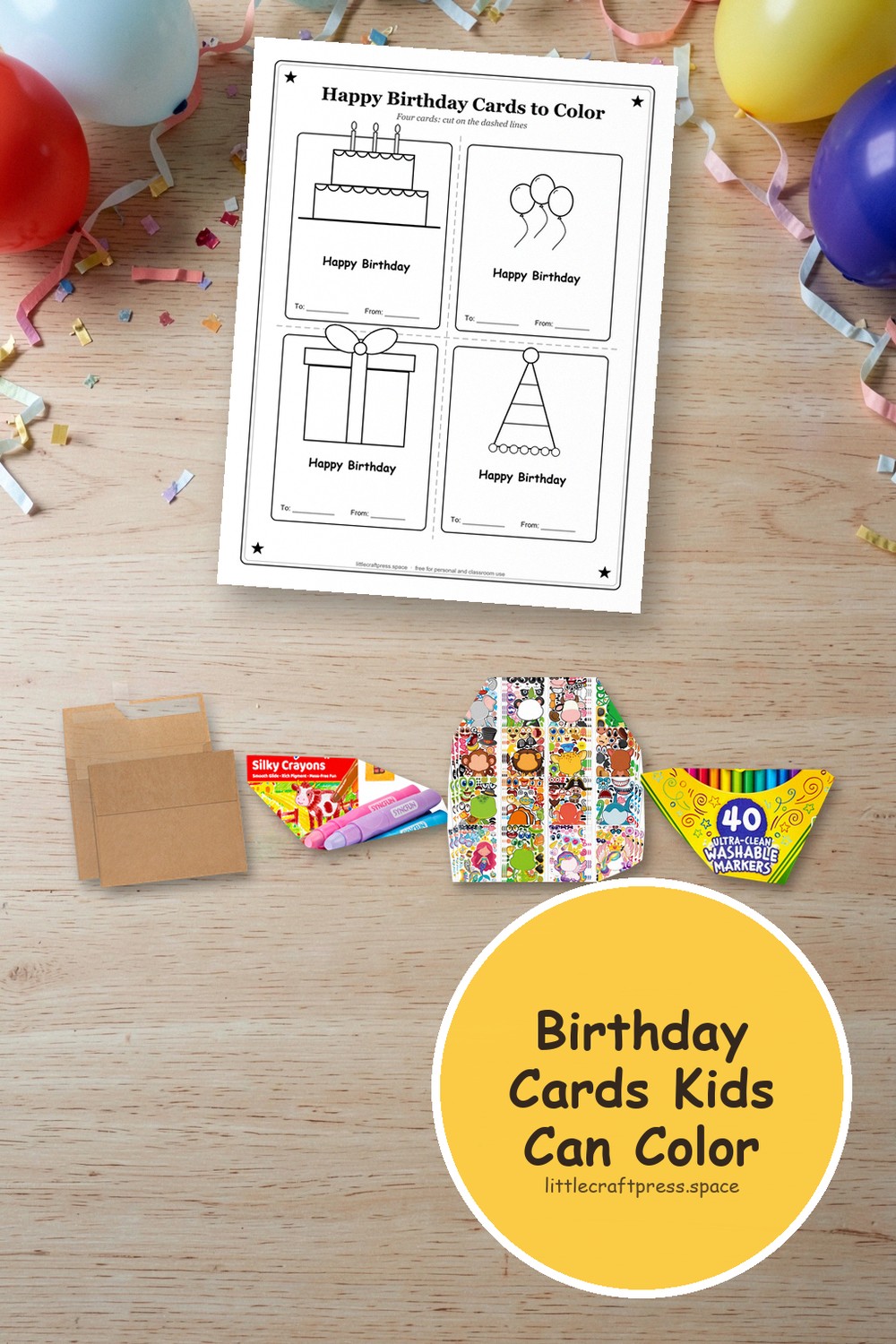
Handy from Amazon
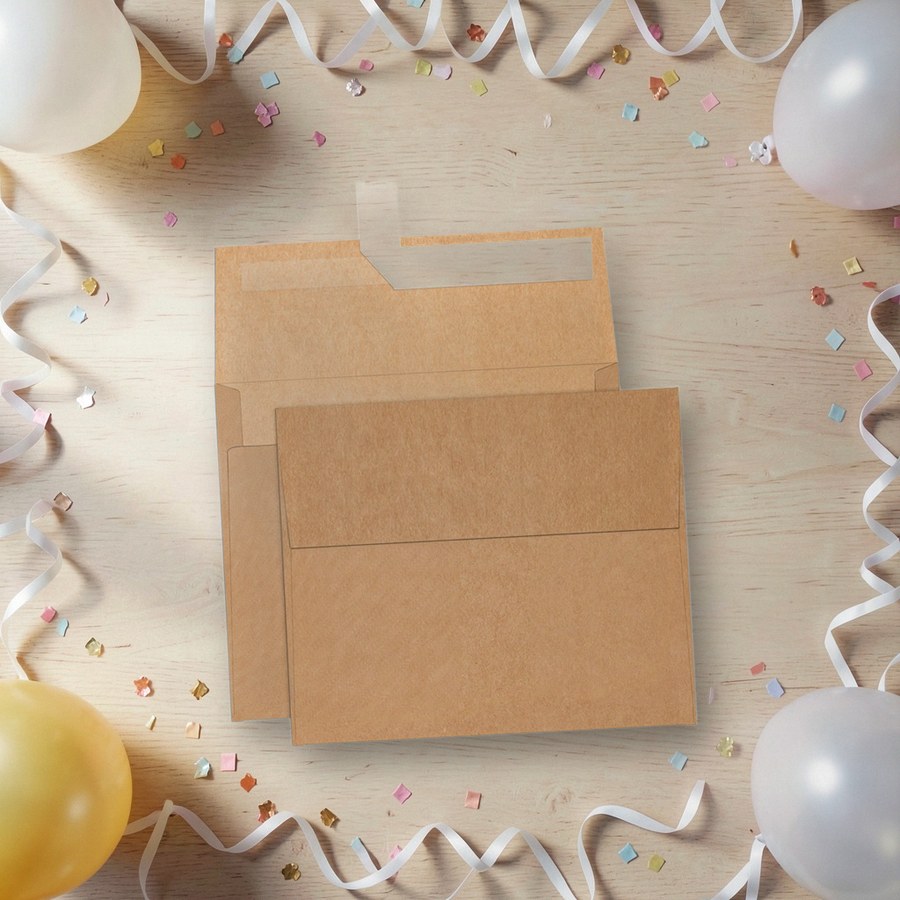 A2 kraft envelopesby GoefunView on Amazon
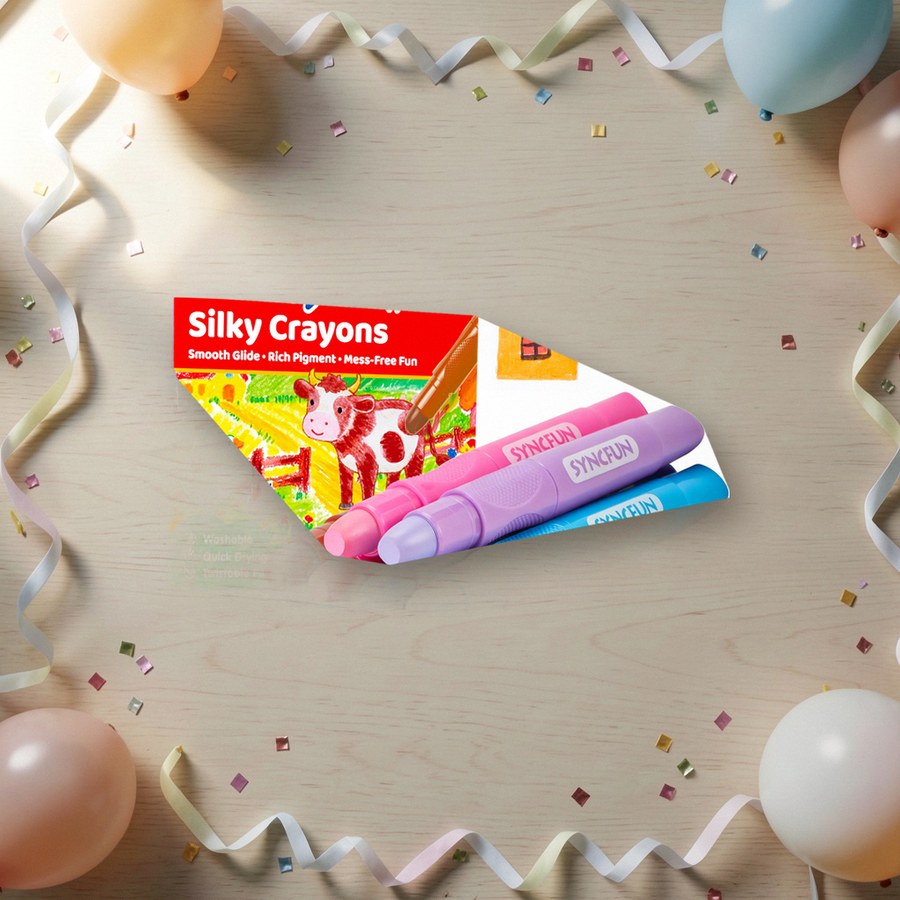 Twistable crayonsby SYNCFUNView on Amazon
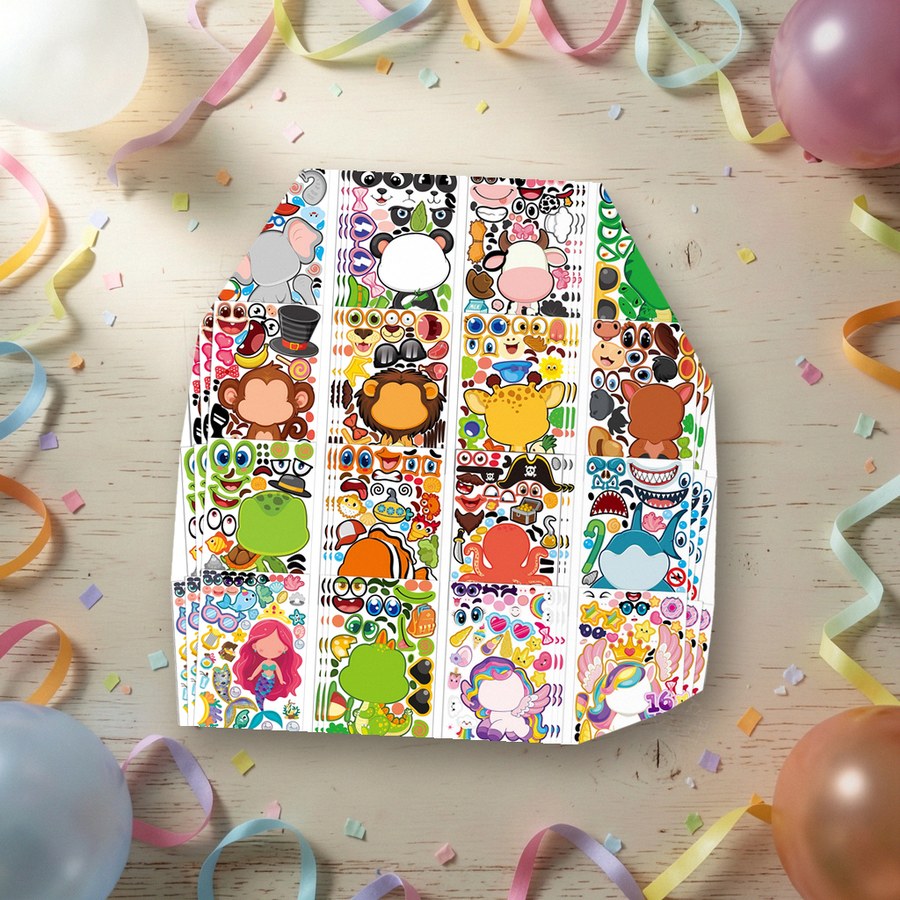 Stickers for kidsby MISS FANTASYView on Amazon
 Fine tip washable markersby CrayolaView on Amazon
As an Amazon Associate we earn from qualifying purchases.
Twistable crayons do not need sharpening and do not break as easily, which helps at a table of younger children. The A2 envelopes are for any card that goes in the mail.
A Class Birthday Card Routine
The Cards from the Class page gives teachers a simple routine: on a child's birthday, every classmate colors one card and signs the From line.
- Print the class page ahead of time, one card per child, with a few spare.
- Use the "from your teacher" card for the teacher's own note.
- Collect the cards in one of the fold-up envelopes or a folder, and send the stack home at the end of the day.
A child who gets twenty small cards from classmates gets twenty notes in twenty kinds of handwriting. Pair it with a birthday crown for the birthday child and it becomes a class tradition.
More for the Party
If the cards are for a party, the invitation is next. A few designer invitations from the birthday invitation templates collection:
From the Birthday Invitation Templates pack on Creative Fabrica

Party Animals Kids Birthday Invitation
See it on Creative Fabrica
Classic Kids Birthday Party Invitation
See it on Creative Fabrica
Unicorn Birthday Invitation Template
See it on Creative Fabrica
To decorate the room as well, print the Happy Birthday banner for the children to color, and roll a few mini cones from the party hat template.